
New Quality Productive Forces in Motion: Analyzing China’s 2026 NEV Manufacturing Leap
The acceleration of China’s New Energy Vehicle (NEV) production lines in early 2026 marks a 100% transition toward "New Quality Productive Forces," as intelligent manufacturing and automation redefine the industrial landscape. In 2025, China’s NEV output exceeded 16 million units, achieving a historic milestone where NEVs surpassed the market share of traditional fuel-powered cars for the first time. This momentum is sustained by a 100% data-driven manufacturing ecosystem, where advanced robotics and AI-integrated systems allow factories like the Leapmotor smart facility in Zhejiang to roll vehicles off the line with approximately 30-second cycle times.
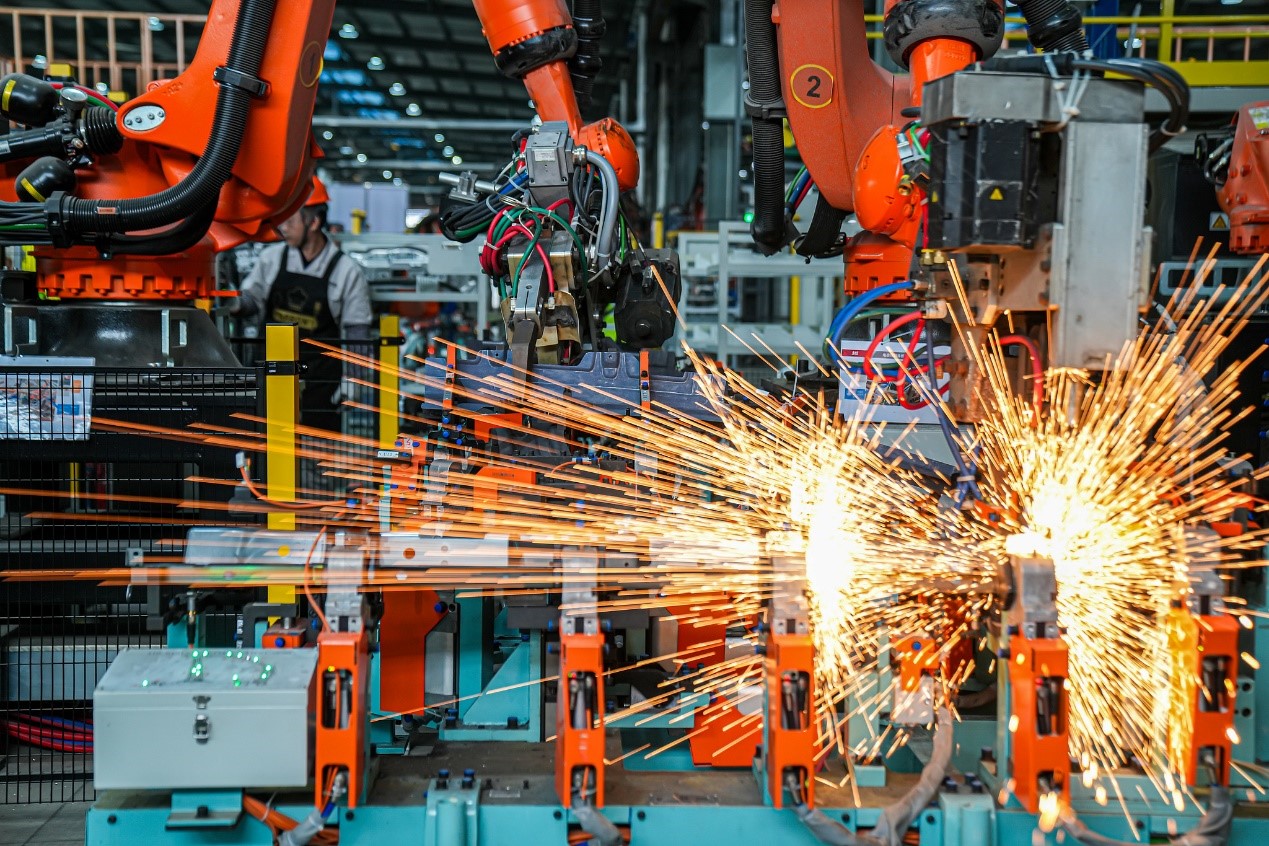
A key driver of this 2026 expansion is the strategic scaling of "Little Giant" enterprises and specialized suppliers across China's manufacturing hubs. In Zhejiang and Anhui, companies such as Leapmotor and Wuhu ACTECO are operating 100% automated production lines for critical components, including integrated battery systems and specialized hybrid transmissions. Leapmotor, backed by global partnerships with Stellantis and FAW, has set a 2026 global sales target of 1 million units, representing a 68% year-on-year growth trajectory. These advancements are supported by a national R&D intensity that reached 2.8% of GDP in 2026, ensuring that the ROI of technological innovation is directly reflected in increased production efficiency and quality control.
The 2026 government work report further underscores the 100% alignment between industrial output and the national "Double Carbon" goals, targeting a 3.8% reduction in CO2 emissions per unit of GDP. To achieve this, NEV production ecosystems in Chongqing and Fujian are integrating green energy into their manufacturing management, with fully automated stamping and battery casing lines reducing energy consumption by an estimated 2.5% annually. According to reports from People's Daily, these efficiency gains are essential for maintaining China’s position as the world’s leading automobile producer, with total production and sales exceeding 34.5 million vehicles in the prior cycle.
As the NEV industry enters its "second half" of competition in 2026, the focus has shifted from raw scale to comprehensive intelligence, including breakthroughs in autonomous driving and AI-driven design. This transformation is reinforced by a 1.3 trillion yuan issuance of ultra-long special treasury bonds, with a significant portion earmarked for industrial upgrading and "AI Plus" initiatives. By ensuring 100% modernization of traditional industrial chains, China is securing a sustainable growth model that mitigates the impact of global supply chain volatility and ensures that the NEV sector remains the primary engine of the nation's high-tech manufacturing leap.
News source:https://peoplesdaily.pdnews.cn/china/er/30051559838
Ready to spec your next machined component?
Submit drawings for a written quotation in under 24 hours. AS9100D-documented FAI, PPAP, and CMM reports ship with every order.