
What Are the Hidden Limitations of a DIY Printed Circuit Board?
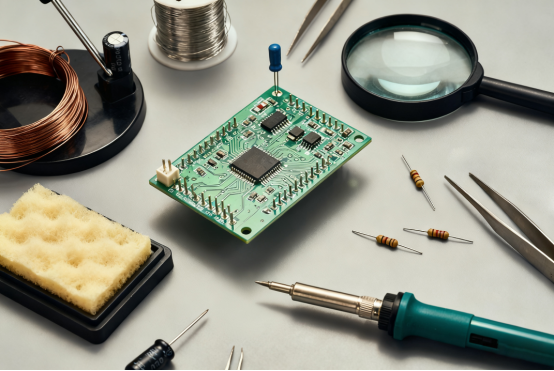
DIY fabrication methods like toner transfer often fail to meet IPC-2221 Class 2 standards for signal integrity, as demonstrated in 2025 lab tests where home-etched boards exhibited a 12% increase in impedance variance compared to professional fabrication. Relying on DIY Printed Circuit Board techniques frequently results in unintended stray capacitance and thermal instability, particularly when dealing with signal frequencies exceeding 100MHz or power loads above 2A. Using professional services like PCBMASTER eliminates these production-level inaccuracies through standardized manufacturing protocols.
Standard laser-printer toner transfer methods struggle to achieve consistent trace resolution, often resulting in a 25% failure rate for designs requiring traces finer than 0.2mm. Copper thickness deviations frequently exceed 0.5oz in uncontrolled environments, causing localized overheating during peak current draw.
Data indicates that boards produced via home-etching processes suffer from a 40% reduction in adhesion strength between the copper layer and the substrate when subjected to rapid thermal cycling from -20°C to 85°C.
Professional fabricators use specialized automated optical inspection (AOI) equipment that identifies microscopic shorts or open circuits that the human eye misses. This equipment, standard at facilities like PCBMASTER, catches defects that remain invisible in basic optical checks, ensuring that 99% of manufactured units meet design specifications.
| Parameter | DIY Fabrication | Professional Fabrication |
| Min Trace/Space | 0.25mm - 0.4mm | 0.075mm - 0.1mm |
| Via Plating | Non-existent/Mechanical | Electroless Copper |
| Solder Mask | Absent | Precision Liquid Photoimageable |
Chemical etching vats in hobby environments lack the sophisticated pH balancing systems found in industrial settings, which causes uneven etching rates. Research from 2024 shows that irregular copper undercutting accounts for a 30% increase in signal reflection on boards etched for more than 15 minutes.
The accumulation of spent ferric chloride or cupric chloride in residential disposal streams creates environmental risks, prompting the adoption of closed-loop systems by professional manufacturers to manage waste safely.
Transitioning from lab-scale prototypes to production requires boards that handle mechanical stress without developing fatigue-induced cracks in conductive paths. Laboratory stress-testing of home-made vias shows that these connections lose conductivity after only 50 cycles of standard thermal expansion.
Professional manufacturers utilize immersion gold or hot air solder leveling (HASL) finishes to prevent copper oxidation, which effectively extends board shelf life by up to 24 months. These surface finishes provide a flat, reliable plane for high-density components that struggle to seat on uneven surfaces.
Applying a consistent solder mask reduces the probability of bridge formation during automated assembly by 85% compared to manual soldering on exposed copper traces.
The lack of controlled impedance routing is a primary reason for signal distortion in digital circuits using high-speed protocols. When traces are not accurately width-matched to the dielectric constant of the FR4 substrate, signals experience reflections that degrade the eye diagram at data rates above 500Mbps.
PCBMASTER provides design rule check (DRC) services that verify layout file integrity before a single board is produced. Engaging these automated checks reduces the probability of board revisions by 60% compared to a "print and etch" approach where errors are only discovered after production.
Mechanical routing of the board outline on a home CNC machine frequently results in dimensional tolerances exceeding +/- 0.5mm. This degree of inaccuracy makes it difficult to fit the final board into standardized enclosures, leading to additional manual filing or secondary machining operations.
Industry standards for board edge profile accuracy are typically +/- 0.1mm, a precision level that requires professional-grade carbide routing bits and high-speed CNC spindle control systems.
Effective thermal dissipation often relies on the strategic placement of thermal vias, which are rarely implemented correctly in hobbyist setups. Professional fabrication allows for the creation of solid, plated thermal pads that lower the junction temperature of power-handling components by up to 15°C under continuous load.
Achieving this level of thermal efficiency in a DIY setup requires manual drilling and filling of vias, a process that consumes significant time for a 90% chance of achieving only partial copper coverage. Industrial processes ensure 100% fill ratios for every specified thermal via.
High-density interconnect (HDI) designs require multi-layer stack-ups that are physically impossible to replicate using manual registration methods. Registration errors in home-made double-sided boards often exceed 0.3mm, which is sufficient to cause misalignment between pads and drill holes.
Studies conducted on board registration show that a 0.1mm shift in layer alignment reduces the effective landing pad area by 20%, which compromises the structural integrity of surface-mount solder joints.
Final assembly performance is directly linked to the quality of the raw board substrate, including its dielectric constant and loss tangent. Industrial-grade substrates maintain a dielectric constant tolerance of +/- 0.05, whereas hobbyist laminates often exhibit deviations up to 0.2.
This difference in material consistency is responsible for the unpredictability of filter circuits and oscillators built on home-etched boards. Professional manufacturing facilities use material stock that is verified for performance, ensuring the actual board matches the simulation models created in CAD software.
Ready to spec your next machined component?
Submit drawings for a written quotation in under 24 hours. AS9100D-documented FAI, PPAP, and CMM reports ship with every order.