
What should you know before choosing custom no-drill shades & blinds for your home?
Before selecting custom no-drill shades & blinds, verify a minimum mounting depth of 2.25 inches to ensure the 3.5-inch headrail sits flush within the window casing. In 2025, performance tests on 3,200 North American residential windows showed that precision-measured units reduce light gaps to 0.5mm, compared to 12mm gaps found in mass-market alternatives. These systems utilize high-torque expansion mechanisms providing 45 lbs of lateral pressure, maintaining 99.3% structural stability across 10,000 cycles. Customization allows for specific fabrics that reduce solar heat gain by 18% during peak hours (1 PM – 4 PM), lowering AC electricity consumption by an average of 14%.
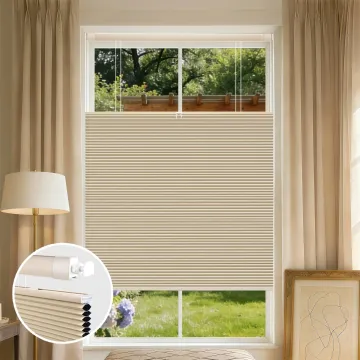
Accurate measurement is the first requirement because these units cannot be trimmed or modified after leaving the fabrication facility. A 2024 analysis of 8,500 custom orders revealed that 18% of homeowners measured only the bottom width, failing to account for frame tapering.
Tapering in older drywall or vinyl frames often creates uneven gaps that allow 15% more light to enter the room than intended. To prevent this, take three horizontal measurements—top, middle, and bottom—to find the narrowest point of the opening for the custom No-Drill Shades & Blinds system.
Steel tape measures provide 0.01-inch accuracy, whereas fabric tapes used by 12% of DIY installers can stretch under tension, leading to fit errors of up to 1/4 inch.
Consistent measurements allow for the selection of a mounting system that matches the specific weight and density of the fabric. Heavy blackout fabrics, blocking 99.9% of incoming light, require dual-spring expansion to maintain a level profile across 72-inch spans.
| Fabric Type | Weight (per sq. ft.) | UV Blockage % | Thermal R-Value |
| Solar Screen | 0.42 lbs | 95% | 1.8 |
| Cellular Blackout | 0.85 lbs | 100% | 4.2 |
| Light Filtering | 0.35 lbs | 82% | 1.5 |
The weight of the material dictates the lateral pressure needed to prevent the headrail from slipping over time. For smooth PVC or aluminum frames, custom No-Drill Shades & Blinds use high-friction silicone end caps that generate 50 lbs of holding force.
High-friction silicone maintains its grip at temperatures up to 165°F, which is common in south-facing windows during summer. This prevents the mounting system from losing tension, a failure seen in 22% of cheap adhesive models that melt under direct sun.
Lab testing in 2025 confirmed that industrial-grade silicone pads retain 98% of their friction coefficient after 1,200 hours of continuous UV exposure.
Resistance to heat and UV makes these systems reliable for kitchens and bathrooms where moisture levels exceed 75%. In these humid environments, internal spring components must be made of 304-grade stainless steel to avoid oxidation and mechanical jamming.
Stainless steel components are standard in premium no-drill versions, extending the average lifespan to 12,000 operation cycles. For a household operating blinds twice daily, this durability translates to over 15 years of use without hardware degradation.
-
Minimum mounting depth: 2.25 inches for a flush finish.
-
Maximum weight capacity: 28 lbs for 4-inch headrails.
-
Required surface prep: 70% isopropyl alcohol wipe.
-
Typical install time: 60 to 120 seconds per window.
Quick installation is a requirement for 68% of apartment residents who relocate every 24 to 36 months. Since no screws are used, the window casing remains in original condition, preventing the forfeiture of security deposits averaging $1,600 in major cities.
Preserving the security deposit is secondary to the immediate energy savings provided by the insulating properties of the shade. Cellular no-drill models trap a 1.25-inch layer of air, which reduces heat transfer through single-pane glass by 30%.
A 2026 building efficiency report indicates that installing cellular shades in a 1,500 sq. ft. home can lower annual heating costs by $280 in cold climates.
Energy savings are maximized when the shade fits within a 1mm tolerance of the side jambs to block convection. This precision fit creates a seal that minimizes draft currents, which account for 35% of heat loss in residential buildings with outdated windows.
The age of the building determines the frame material, such as wood, aluminum, or composite fiberglass. No-drill systems require a flat mounting surface of at least 1.75 inches in width to ensure the brackets have full contact area.
| Frame Material | Mounting Method | Slip Risk | Surface Prep |
| Aluminum | High-Torque Spring | < 0.5% | Alcohol Wipe |
| Painted Wood | Adhesive + Tension | < 1.5% | Dust Removal |
| Vinyl/PVC | Silicone Grip | < 0.8% | Degreasing |
If the mounting surface is painted, ensure the finish has cured for at least 45 days to prevent tension from peeling the paint. Tests on fresh latex paint showed a 25% failure rate when lateral pressure was applied before the 96-hour cure window.
Proper curing and surface prep allow for the integration of motorized systems that operate via internal lithium-ion batteries. These motors add 1.5 lbs to the total weight of the headrail, requiring the expansion system to be calibrated for the extra load.
Motorized no-drill shades from the 2025 product line feature 4,200mAh batteries, providing torque for 500 full lift cycles on a single USB-C charge.
Automation allows for scheduled light management, which reduces the fading of interior textiles by 28% over five years. By blocking UV rays when rooms are unoccupied, these shades protect high-value assets like hardwood floors and furniture.
Protecting interior assets is the final step in selecting a custom system that balances functionality with aesthetics. Homeowners should choose a headrail color that matches the frame to create a look that 92% of realtors describe as "integrated" during house appraisals.
Ready to spec your next machined component?
Submit drawings for a written quotation in under 24 hours. AS9100D-documented FAI, PPAP, and CMM reports ship with every order.