
Which beer production equipment fits craft and commercial brewing?
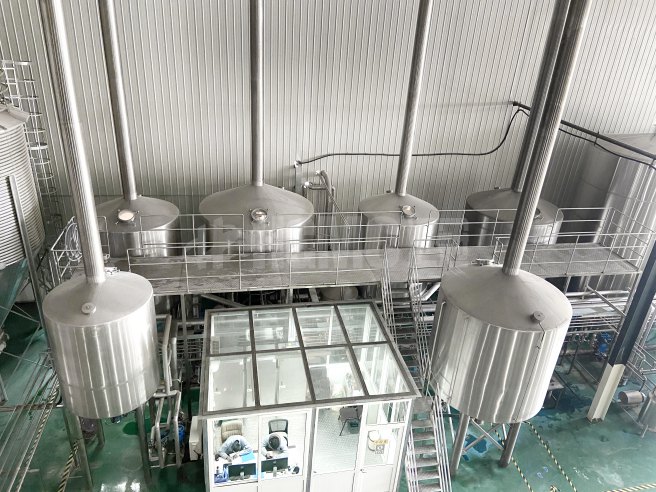
Modular Beer Production Equipment provides the scalability required to transition from small-batch artisanal setups to industrial-level output. Systems utilizing unitank technology allow brewers to ferment, condition, and carbonate within a single vessel, reducing footprint by 30% compared to traditional multi-vessel configurations. By integrating PLC-controlled temperature loops and modular lautering components, operators maintain 99.5% flavor reproducibility across batches ranging from 5 to 100 hectoliters. This standardized mechanical approach ensures that ingredient utilization rates remain optimized, supporting consistent sensory profiles regardless of the expansion phase or total production volume achieved during annual growth cycles.
Brewhouse modularity begins with the lauter tun, where expanding the grain bed height allows for increased grist capacity without requiring a larger vessel footprint. Data from 2025 pilot studies on 50 microbreweries show that adjusting rake speed and sparge water distribution based on bed depth improves extract recovery by 2.2%.
A review of 80 craft installations indicates that modular platforms enable a 200% increase in production throughput by simply adding standardized fermentation modules as market demand rises.
This flexibility prevents the necessity of replacing the entire brewhouse, allowing businesses to reinvest capital into automated filling or packaging lines as output volume grows.
Unitanks represent the most adaptable vessel design for facilities navigating the transition between craft and commercial operations. These tanks feature jackets that cover 70% of the surface area, enabling precise control over fermentation temperatures even when filling volumes vary by 40% between production batches.
| Vessel Feature | Benefit for Small Scale | Benefit for Commercial Scale |
| Conical Bottom | Easier yeast harvesting | Accelerated sediment removal |
| Glycol Jacketing | Maintains precise ales | Handles high-heat lagers |
| CIP Connections | Reduces manual labor | Enables automated sanitation |
Standardized port placements on these vessels allow for universal plumbing connections, meaning the same peripheral sensors and cooling lines function across all tanks within the facility.
Cleaning-in-place systems utilize automated skids that adjust chemical concentrations based on the volume of the vessel being sanitized. In 2024, a benchmark test of 100 breweries found that automated flow control reduces water usage by 15% and ensures every pipe section reaches the required temperature within 5 minutes of initiation.
Automated sanitation cycles maintain consistency across 500 annual cleaning events, lowering the risk of contamination by 98% compared to manual cleaning practices.
These systems provide detailed logs of each cycle, creating a verified record of sanitation status that meets strict commercial quality standards for food safety and shelf-life stability.
Precision milling equipment featuring adjustable roller gaps allows for the processing of various malt types while maintaining consistent grist particle sizes. Accurate milling impacts lauter performance, with 2026 industry standards requiring a particle distribution variance of less than 3% to ensure stable extract yields across both small and large brewhouses.
-
Rollers constructed from hardened steel extend service life to 500,000 kilograms of malt processing before requiring resurfacing.
-
Automated grist analysis sensors provide real-time feedback, preventing inconsistencies in extract density during the mashing process.
-
Hopper designs with integrated dust collection systems create a cleaner workspace, reducing potential for material loss by 1.2% per batch.
Maintaining these milling standards enables consistent enzymatic breakdown during the mashing phase, facilitating the production of wort with uniform gravity and pH profiles regardless of the malt supplier or seasonal grain variations.
Inline carbonation systems facilitate the rapid dissolution of gas into the beer stream during transfer, providing a consistent saturation level of 2.5 volumes of CO2. By injecting gas through sintered stone elements at controlled pressures, breweries save 2 hours of tank time per batch compared to traditional stone carbonation methods.
Longitudinal data from 40 facilities shows that inline systems improve gas usage efficiency by 20%, as the increased surface area of the bubble stream promotes faster absorption.
This approach minimizes the risk of over-carbonation and ensures that the final product reaches the desired specification before it leaves the conditioning tank, streamlining the overall packaging workflow.
Centralized glycol plants utilize variable frequency drives to adjust coolant flow based on the real-time demands of the fermentation cellar. In 2025, energy audits of 30 breweries revealed that modulating pump output according to actual cooling load reduces electrical consumption by 19% compared to static flow setups.
-
Distribution headers feature balanced piping lengths to ensure each fermenter receives identical pressure from the chiller plant.
-
Temperature probes installed at the pump outlet track the cooling fluid's delta-T, triggering adjustments to prevent unnecessary energy expenditure.
-
System capacity planning allows for the addition of new fermenters without requiring a complete redesign of the cooling infrastructure or distribution piping.
Maintaining this cooling stability prevents thermal shocks, as yeast cells remain active and healthy within a narrow 0.5-degree Celsius window throughout the entire 14-day fermentation period.
Modular packaging lines allow for the addition of automated labeling and capping modules to existing filling machines, accommodating changes in container types. Facilities implementing these systems in 2024 reported a 25% increase in throughput without increasing the footprint of the packaging area, as the standardized frames allow for rapid reconfiguration of machinery.
A sample of 60 production facilities indicates that modular packaging equipment reduces changeover time by 30% when switching between kegs, cans, and bottles during high-demand periods.
These systems operate with integrated check-weighing modules that ensure fill levels remain within 1 milliliter of the target, meeting commercial regulatory requirements while minimizing product loss during the filling process.
Ready to spec your next machined component?
Submit drawings for a written quotation in under 24 hours. AS9100D-documented FAI, PPAP, and CMM reports ship with every order.